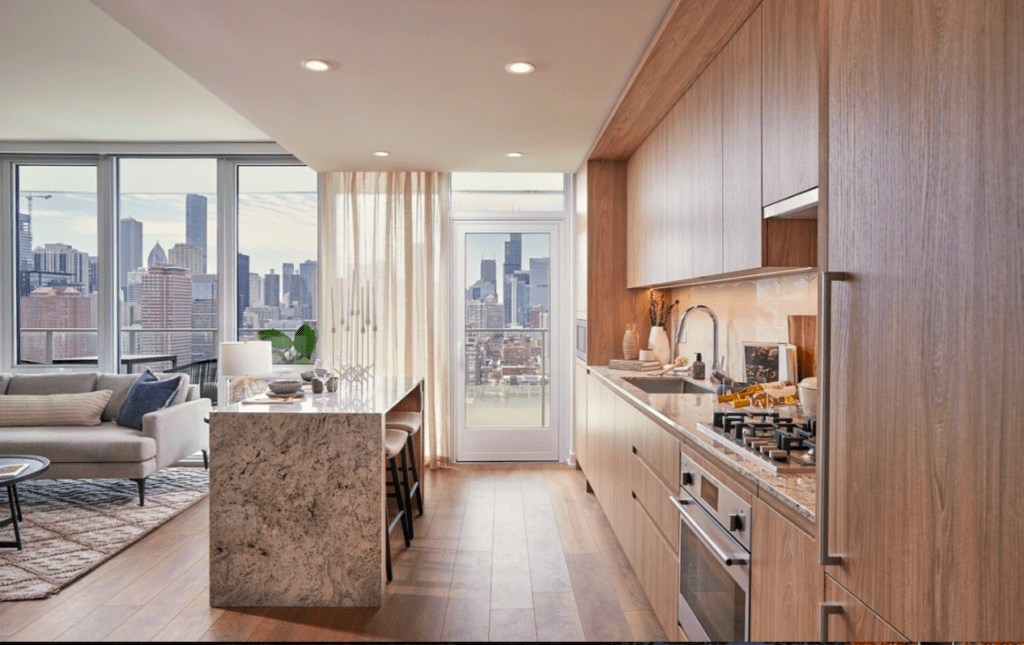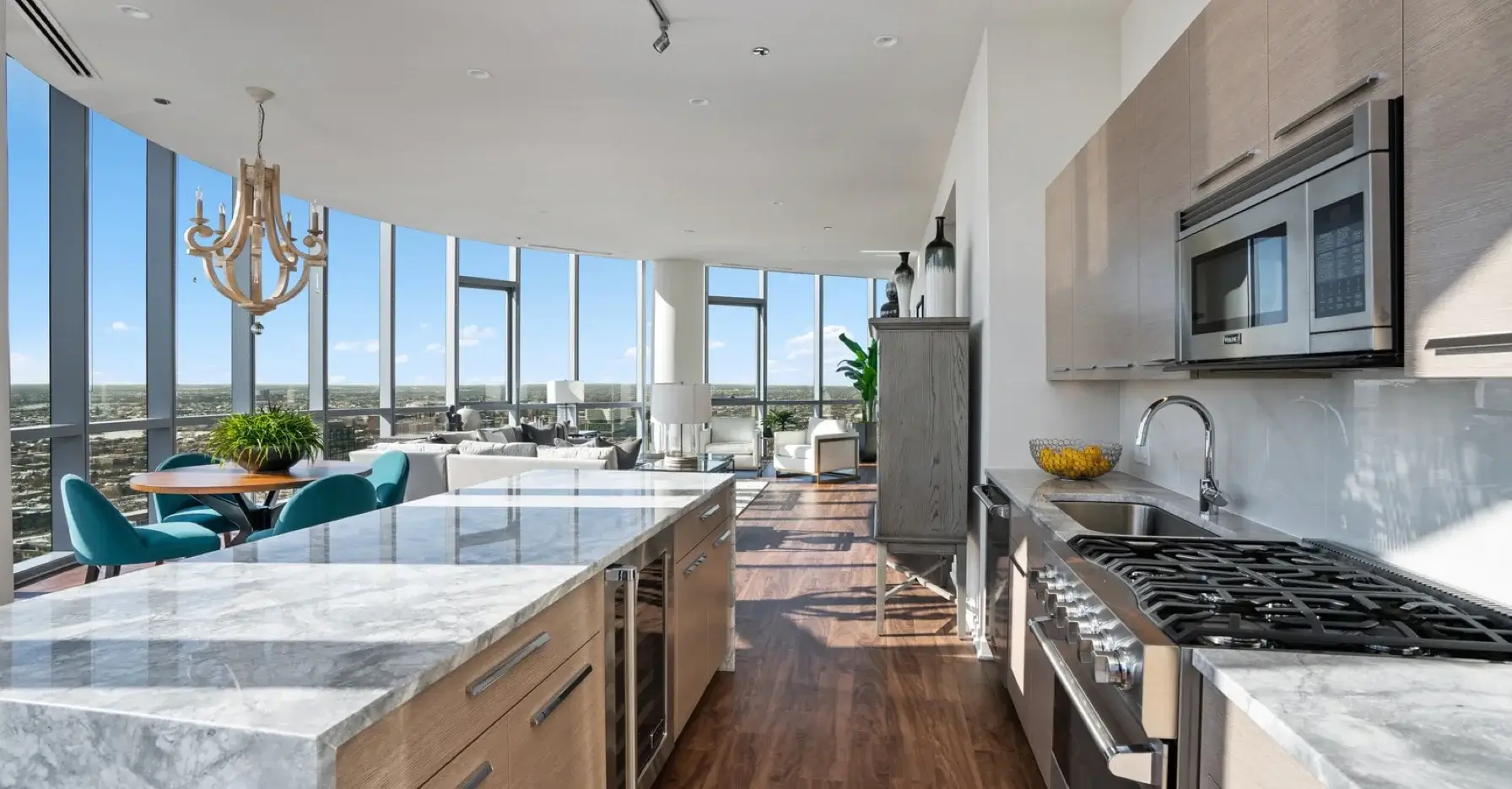












Chicago’s apartment market slows down from late fall through early spring, and the luxury buildings downtown tend to adjust pricing so it’s easier to find deals on apartments and concessions. Fewer people are touring, buildings still have units to fill, and that shifts some of the typical price points on luxury apartments. Some would say winter could be the best time to rent an apartment in downtown Chicago. There are tradeoffs, and a winter move in Chicago takes a little more planning. Here’s how the season works and how to use it to your advantage!
Why Rents Soften in Winter
Chicago’s leasing season runs on a predictable calendar. Demand builds in spring and peaks in summer, when many new jobs start and work relocations pick up. By November, the pace drops off. The gap between peak and low season was about 4.3% for one bedrooms and 7.1% for two bedrooms, one of the largest seasonal swings among the cities it studied.
Base rent isn’t the only place to find savings. In the slower months, downtown buildings are more likely to offer:
- Free rent, often several weeks or a month spread over the lease
- Waived or reduced admin and move-in fees
- Discounted parking for the first few months
- Flexible lease lengths
Lease length is worth thinking about. Buildings would much rather have a lease end in late spring or summer, when the apartment is easy to fill again. Offering a 14 to 17 month lease that ends during peak season can make a building more willing to sharpen its pricing, and it can help you too. That’s when you’ll have the most options if you decide to move again.
New buildings that are still leasing up are a great place to look. Recently opened properties like Stead 220 often have some of the best specials of the season.
The Tradeoff: Fewer Apartments to Choose From
Lower demand also means lower inventory. Fewer renters are moving out in the winter, so there are fewer apartments on the market at any given time. If you need a specific layout, like a two bedroom split floor plan or a unit with a balcony, your choices in a particular building may be limited.
That’s where working with an apartment advisor helps. We track availability across downtown buildings, including units that haven’t hit the listing sites yet, so you can compare more options in less time.
Our guide to moving into a Chicago high rise covers a full checklist of things to consider.
Amenities That Matter More in Winter
Touring in winter is a good stress test. Pay attention to the amenities you’ll use from December to March, not just the rooftop pool you’ll enjoy in July. Indoor pools, like the one at The Streeter, large fitness centers, coworking lounges, package rooms, and attached heated garages with EV charging all earn their keep when it’s 10 degrees outside. Some Loop and Lakeshore East buildings also connect to the Pedway, which lets you reach parts of downtown without going outside.
When to Start Looking
For a winter move, start your search about 30 to 60 days before your move date. Most downtown buildings only show apartments that will be ready within that window, so starting much earlier mostly means looking at units that will be gone by the time you’re ready.
Thinking about a winter move? Contact Downtown Apartment Collective and we’ll send current specials across downtown Chicago!