



Exploring Famous Apartment Buildings in Chicago
Chicago’s skyline is often discussed in terms of office towers and architectural milestones, but the city’s residential buildings tell an equally important story. Apartment buildings have long shaped how Chicago neighborhoods developed and how residents experience city living.
From early twentieth century landmarks to contemporary high rise towers, famous apartment buildings in Chicago reflect the city’s ongoing relationship with design, density, and what renters are looking for in terms of location, amenities, and finishes.
Why Chicago’s Apartment Buildings Stand Out
Chicago occupies a unique place in architectural history. The city’s rebuilding period after the Great Chicago Fire, combined with advances in engineering and materials, created an environment where architects could experiment at scale.
While commercial buildings often receive the most attention, residential towers became a testing ground for ideas about light, space, and modern living. Many famous Chicago apartment buildings are recognized not simply for height, but for how they approached everyday functionality.
Residential architecture here is rarely just about housing. These buildings influence street life, neighborhood identity, and even how the skyline itself is perceived.
A Historical Overview of Chicago’s Apartment Buildings
Chicago’s apartment building history mirrors the city’s broader growth.
In the late nineteenth and early twentieth centuries, apartment buildings emerged as a practical response to population growth. Early examples prioritized durability and density, often using masonry construction and classical detailing.
By the 1920s and 1930s, Art Deco and early modern influences began to appear. Buildings from this era balanced ornamentation with evolving ideas about efficiency and urban living.
Postwar Chicago marked a major shift. Architects like Ludwig Mies van der Rohe redefined residential design through minimalism, steel, and glass. High rise apartment living became associated with modernity rather than necessity.
Today, Chicago’s residential towers continue this lineage, combining contemporary materials with amenity driven lifestyles.
Architects Behind Chicago’s Residential Landmarks
It is difficult to discuss famous apartment buildings in Chicago without acknowledging the architects who shaped them.
Ludwig Mies van der Rohe’s influence remains central. His work on 860 and 880 Lake Shore Drive fundamentally changed high rise residential design. The buildings’ steel and glass façades stripped away decoration, emphasizing proportion, structure, and light.
Bertrand Goldberg approached residential architecture from a different angle. Marina City, with its circular “corn cob” towers along the Chicago River, challenged conventional tower geometry. While technically mixed use, the residential floors helped redefine riverfront living.
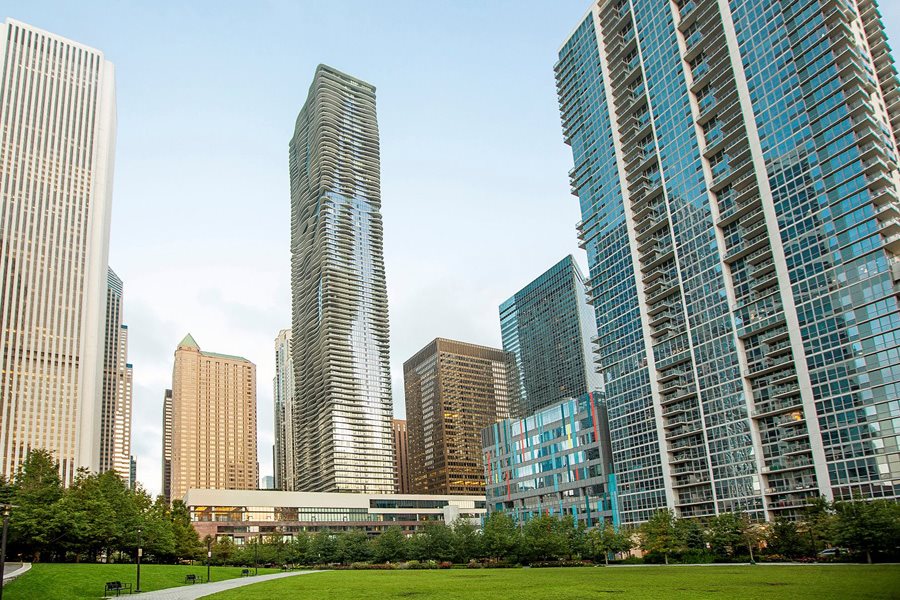
More recently, Jeanne Gang’s Aqua Tower introduced undulating balconies that altered how façades interact with light, views, and wind. The building became an instant visual landmark and remains one of the most discussed residential towers in the city.
Early High Rise Residences
Prewar apartment buildings often leaned into classical and Art Deco influences. Structures like The Palmolive Building, originally designed for commercial use but later converted to residences, illustrate how historic buildings continue to evolve within the housing market.
Similarly, buildings along Lake Shore Drive from the early twentieth century reflect an era when residential prestige was closely tied to masonry façades and ornamental detailing.
Modernist Towers
Mid century modernism marked a decisive turn. The Lake Shore Drive towers by Mies introduced clarity, repetition, and structural honesty. These buildings prioritized views, natural light, and rational layouts.
Modernist principles continue to inform many of the most popular apartment buildings in Chicago, even when paired with contemporary amenity packages.
Contemporary High Rise Design
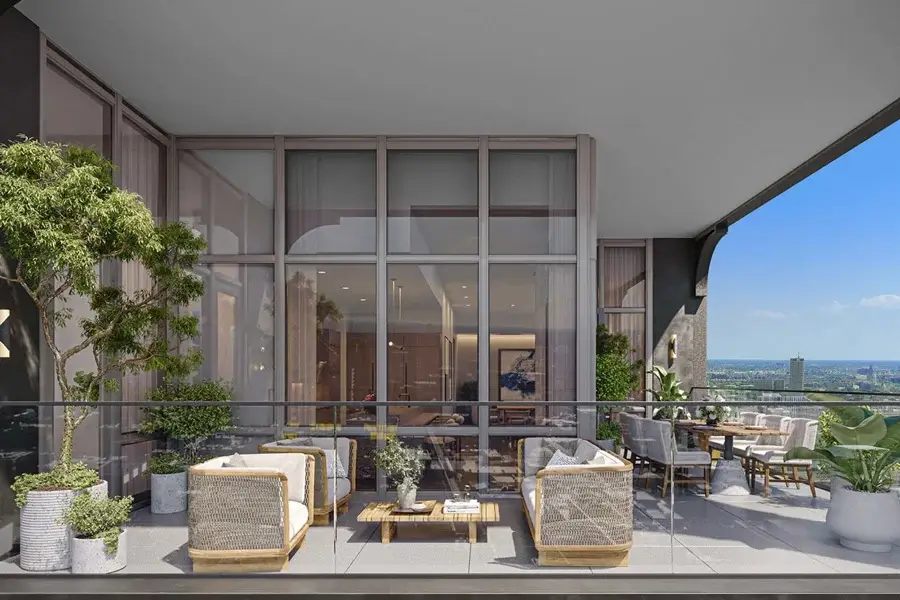
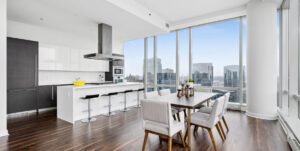
Recent decades have seen greater formal experimentation. Towers like Aqua, One Chicago, and newer developments at Wolf Point contribute distinct silhouettes while integrating mixed use functions. Balconies, glass systems, and floor to ceiling windows now shape how residents interact with the city visually and spatially.
Guided Tours and Architectural Exploration
For architecture enthusiasts, Chicago offers multiple ways to engage with its residential landmarks.
Walking tours throughout downtown and along Lake Shore Drive frequently highlight residential towers alongside commercial icons. The Chicago Architecture Center and river cruises provide context for how these buildings fit into the city’s broader development story.
For renters, exploration often takes a more practical form. Touring apartment buildings allows prospective residents to experience layouts, views, and building amenities firsthand.
Those searching for availability across high rise properties can explore current listings for chicago luxury apartments, which consolidate building level inventory throughout downtown neighborhoods.
Chicago’s Apartment Buildings in the Rental Market
Architectural reputation and rental dynamics are closely linked.
Buildings recognized as architectural landmarks often maintain strong demand, even as newer towers enter the market. Design pedigree, location, and long term building management all influence how these properties perform.
Modern renters evaluate more than square footage. Floor plans, window lines, shared spaces, and building services shape perceived value.
Emerging trends in apartment living increasingly center on flexibility. Coworking spaces, outdoor terraces, and wellness oriented amenities reflect broader shifts in how residents use their homes.
How to Find Luxury Apartments in Chicago
For many renters, Chicago’s architectural landscape becomes relevant during the apartment search itself.
Unlike smaller markets, Chicago’s high rise inventory is distributed across multiple neighborhoods and building types. Listings are not always centralized, particularly for professionally managed luxury towers.
Digital search tools have simplified discovery, but building specific data remains critical. Real time availability, concessions, and floor plan variations often change quickly, which is why working with a rental broker is usually the best option.
In addition to standard high rise apartments, renters seeking elevated layouts can explore penthouses, which offer a distinct segment of Chicago’s rental market.
Famous Buildings and Neighborhood Identity
Chicago’s residential towers are deeply tied to neighborhood perception. Streeterville, River North, Gold Coast, and the West Loop each present different architectural patterns and residential experiences. The concentration of high rise buildings often influences everything from retail development to pedestrian flow.
When renters ask about the best neighborhoods for living in Chicago, the answer frequently intersects with building typology. High rise living, loft conversions, and mid rise developments each produce different lifestyle feels.